Gateway Shoe: How the Yeezy 350 Quietly Wrecked Your Sneaker Budget

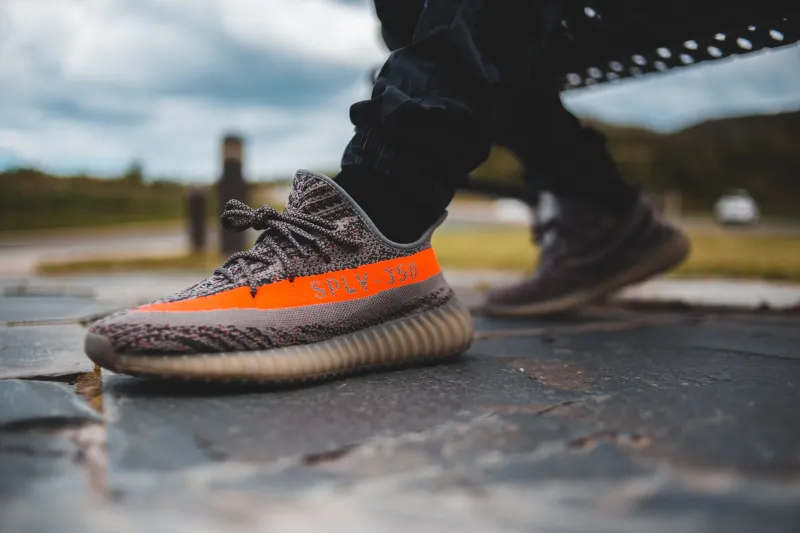
It starts innocently enough. You cop a pair of Yeezy 350s — maybe a Zebra, maybe a Cream White — for somewhere in the $220–$250 retail range. You tell yourself it's a one-time thing. A treat. A controlled experiment in grown-up sneaker collecting.
Six months later, you've got four pairs on the shelf, a StockX account you check before your morning coffee, and a spreadsheet titled "Current Inventory" that your significant other is not allowed to see.
Sound familiar? You're not alone. For a huge chunk of the US sneaker community, the Yeezy 350 wasn't just a shoe — it was a financial turning point. And not always in the direction people expected.
The "Affordable Luxury" Trap
Let's be real about what the 350 was when it dropped in 2015: it was the most attainable piece of Kanye West's vision that regular people could actually touch. While Yeezy Season apparel was running $500 for a hoodie and Yeezy Boost 750s were commanding resale prices that made your stomach hurt, the 350 sat at a price point that felt almost reasonable by comparison.
That's the trap, and it's a well-documented one in consumer psychology. When something expensive is framed next to something more expensive, it suddenly feels like a deal — even when it objectively isn't one. A $220 sneaker is still a $220 sneaker. But next to a $1,200 pair of sneakers, it feels like you're basically saving money.
"I remember thinking, this is fine, it's not that crazy," says Marcus, a 29-year-old graphic designer from Atlanta who now owns 11 pairs of 350s. "But that logic only works once. After the first pair, you're already in the mindset that this is a normal thing to spend money on. The ceiling just keeps moving."
How the 350 Reshaped Collector Portfolios
Before the 350, the high-end sneaker lane was dominated by Air Jordans and Nike SBs — shoes with deep cultural roots and steep learning curves for new collectors. Getting into that world required either serious cash or serious connections. The 350 lowered the velvet rope.
But here's where it gets interesting: the 350 didn't just attract new collectors. It changed existing ones. Sneakerheads who had been perfectly content spending $160 on retro Jordans suddenly found themselves recalibrating. If you're willing to drop $220 on a 350, why not $300 on a V2? And if $300 is on the table, what about $400 resale for a colorway you actually want?
According to resale data tracked across platforms like StockX and GOAT, the average transaction value for Yeezy 350 buyers has climbed steadily year over year — not just because prices have risen, but because buyers are increasingly chasing rarer, higher-premium pairs. The entry point pulled people in; the depth of the catalog kept them spending.
"The 350 was my gateway, 100%," admits Priya, a 34-year-old nurse from Chicago who started collecting in 2016. "I thought I was being responsible because I wasn't buying Jordans for $500 over retail. But I've probably spent more on Yeezys total than I ever would have on anything else. It's sneaky."
Democratization or Escalation? Both, Actually
Here's the nuanced truth: the Yeezy 350 genuinely did democratize high-end sneaker culture in meaningful ways. It brought people into the collector space who might never have found their way in through more expensive or exclusive channels. First-generation collectors, younger buyers, people in mid-sized cities without access to boutique culture — the 350 gave them a legitimate seat at the table.
But democratization and escalation aren't mutually exclusive. The same shoe that made collecting accessible also normalized a spending floor that's significantly higher than what most casual sneaker buyers were used to. Once your baseline is $220, it's psychologically easy to justify $350. And once $350 feels normal, well — you see where this goes.
Financial planners who work with younger clients have actually started flagging "sneaker creep" as a real budgeting concern, particularly among millennials and Gen Z consumers. It's the same principle as lifestyle inflation, just applied to footwear. The Yeezy 350 didn't invent the phenomenon, but it was arguably the shoe that brought it mainstream.
The Resale Variable Changes Everything
One thing that makes the 350's financial story genuinely complicated is resale. Unlike most sneakers, the 350 has a documented history of holding and sometimes dramatically increasing in value — particularly for limited or early-run colorways. That changes the psychological math in a significant way.
When you can tell yourself (and your bank account) that a purchase is also an investment, the guardrails come off. And honestly? For some collectors, that argument has held up. People who sat on early Zebras or Static Reflectives made real money. That success story — even when it's the exception rather than the rule — gives cover to spending that might otherwise feel harder to justify.
"I bought four pairs of one colorway because I convinced myself it was like buying stocks," says Derek, a 31-year-old from Houston. "Two of them I eventually sold at a profit. Two I kept because I actually love them. So was it smart? I don't even know anymore. But I definitely spent more than I planned."
So Is It Worth It?
Here's the honest, non-judgmental take: whether the Yeezy 350's effect on your budget is a problem depends entirely on your financial situation and your relationship with the hobby. For collectors who went in with their eyes open and managed the spending intentionally, the 350 opened up a genuinely rewarding corner of culture. For others, it became the first domino in a spending pattern that took years to reckon with.
What's undeniable is that the shoe changed the math. It moved the goalposts on what felt "reasonable" in sneaker collecting, and it did so at scale — across millions of buyers, across a decade of releases. That's not a small thing.
If you're just getting into the 350 game now, go in knowing this: the price tag on the box is rarely the whole story. Budget for the pair you want, sure. But also budget for the pair you'll want three months from now. Because if history is any guide, there will absolutely be one.
And it'll probably feel totally reasonable at the time.