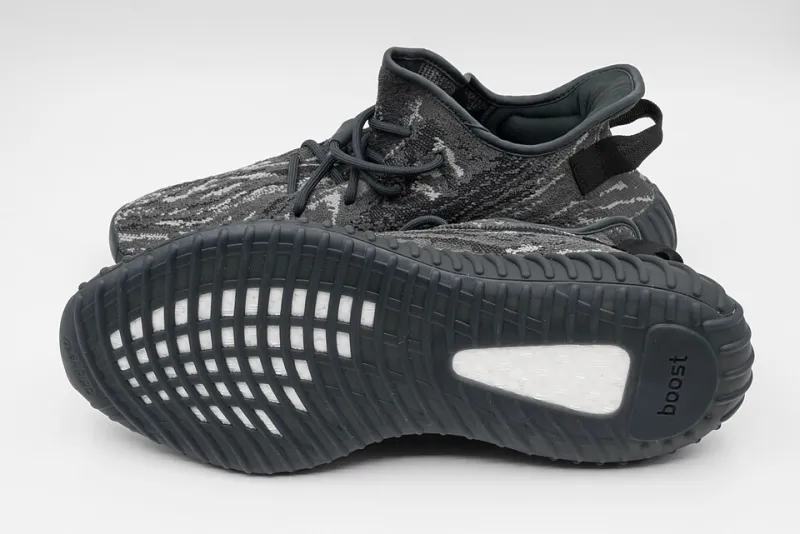
Same Shoe, Different Foot: A Generation-by-Generation Yeezy 350 Sizing Breakdown
Let's be real: the Yeezy 350 is one of the most deceptively tricky sneakers to size when you're buying across different generations. You'd think a shoe that's been around since 2015 would have some consistency baked in by now. It doesn't. The silhouette has gone through enough material changes, last adjustments, and construction tweaks that your size in a 2015 Turtle Dove might leave you hobbling in a 2022 Ash Pearl. If you're building a collection or just trying to snag a pair off the resale market without a headache, understanding how sizing has evolved isn't optional — it's essential.
The OG V1: Snug Is an Understatement
The original Yeezy 350 V1, which dropped between 2015 and 2016, is notorious for running small — sometimes dramatically so. The Primeknit upper on the V1 hugs the foot with very little give, and the toe box is noticeably narrow compared to what most American sneaker buyers are used to. The general consensus from the community — backed up by years of buyer feedback — is that you want to go up a full size from your true size in Nike or Jordan product.
So if you're a Nike 10, you're probably a V1 11. Some wider-footed folks even push to a half size beyond that. The resale market for V1s reflects this: listings that specify fit notes tend to move faster because buyers are skittish about getting burned on a $400+ pair that won't go on their foot.
Bottom line for V1 purchases: size up one full size, no exceptions.
The V2 Era: A Little Room to Breathe
When the Yeezy Boost 350 V2 landed in 2016 with the Beluga, things shifted. The V2 introduced a slightly longer and wider last, a redesigned heel structure, and that now-iconic stripe running across the upper. Fit-wise, the V2 is still considered to run small — but not as aggressively as the V1. The community standard here is a half-size up from your true size, though people with wider feet often still go a full size.
The V2 also introduced more variation across colorways due to different Primeknit constructions. The Zebra, for example, has a slightly different stretch behavior than the Cream White, which used a more rigid woven pattern. These aren't huge differences, but when you're buying on StockX or GOAT without being able to try the shoe on, even a half-size mistake matters.
Community sizing poll results (based on reader responses at Yeezy 350 Hub):
- 54% of V2 owners say half size up is the sweet spot
- 31% went a full size up and found it too loose
- 15% bought true to size and regretted it
Reflective and "RF" Versions: Nearly Identical, With One Catch
Starting around 2019 and into 2020, Adidas began releasing reflective variants of popular V2 colorways — the Zebra RF, the Static RF, and others. The construction on these is nearly identical to their non-reflective counterparts, so sizing carries over pretty cleanly. Go half a size up, same as standard V2.
The one wrinkle? Some early RF releases had slightly stiffer uppers out of the box due to the reflective coating on the Primeknit. That stiffness can make the shoe feel tighter initially, even if the fit is technically correct. Break-in time is real with these. Don't panic-resell after the first wear.
2022–2024 Releases: Has Anything Changed?
This is where things get interesting. More recent 350 V2 drops — the Onyx, MX Oat, Beluga Reflective — have drawn some community debate about whether the last has been subtly adjusted again. Anecdotal reports from collectors suggest the toe box on some 2023 and 2024 pairs feels marginally roomier than early V2 production runs, though Adidas hasn't officially confirmed any last changes.
Our recommendation for anything dropping in 2023 or later: still go half a size up, but if you're ordering from the Adidas app, check the product page for any fit notes Adidas includes — they've been more proactive about flagging this in recent years.
Buying Unfamiliar Drops on the Resale Market: Practical Advice
Here's where collectors get burned the most. You find a grail colorway you missed at retail, you know your V2 size is a 10.5, and you cop. But it's a V1. Or it's a 2017 Cream White with a different Primeknit weave than the V2 you're used to. Suddenly you've got a $500 mistake sitting in a box.
A few rules to live by:
- Always identify the generation before you buy. V1 and V2 are distinct silhouettes. Don't assume the 350 label means one universal fit.
- Read seller notes carefully. On platforms like StockX and GOAT, sellers often include wear condition notes that hint at fit. "Slight creasing at toe box" on a V1 in your true size is a red flag.
- Use the Yeezy 350 Hub community forum. Post the specific colorway you're looking at — chances are someone here has worn it and can give you a real-world fit report.
- Factor in resale risk when sizing up. If you buy a half size up and it doesn't work, reselling a size 10.5 is easier than reselling a 12. Keep demand curves in mind.
The Takeaway
The Yeezy 350 lineup is not a one-size-fits-all situation — literally. From the vice-grip V1 to the slightly more forgiving modern V2, each generation has its own fit personality. Treat every unfamiliar drop like a new shoe from a new brand, do your research, and lean on community data before you commit. Your wallet will thank you.