Show Me the Money: Which Yeezy 350 Colorways Have Actually Made Collectors Rich?
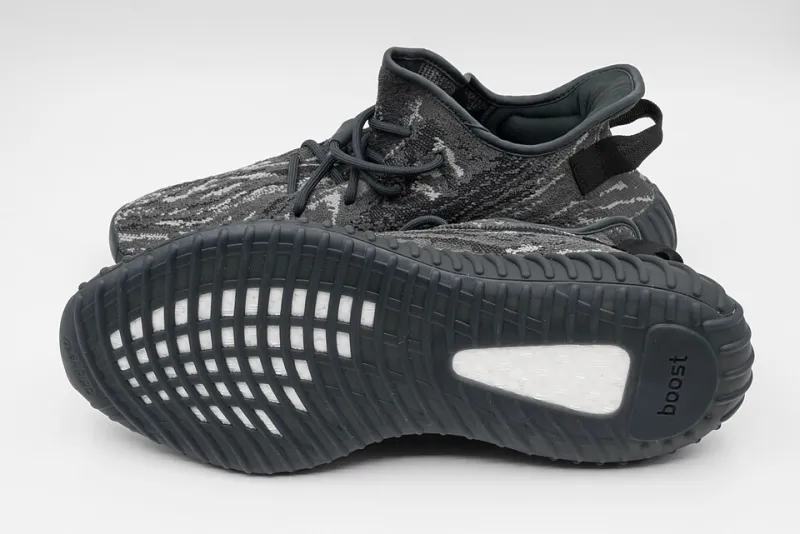
Photo: Jacek Halicki, CC BY-SA 4.0, via Wikimedia Commons
Let's be real — the Yeezy 350 game has always been about more than just wearing heat on your feet. For a huge chunk of the community, these kicks are an asset class. Buy right, hold smart, and you could be sitting on some serious gains. Buy wrong, and you're staring at a pair of shoes that won't even cover your original retail cost on StockX.
We spent time digging through resale data from platforms like StockX, GOAT, and Flight Club to map out which colorways have actually moved the needle on appreciation since their original drops. Spoiler: the results might surprise you.
The Early Era: When Scarcity Was Everything
If you were lucky enough to cop anything from the 2015–2017 window, congratulations — you were playing the game before most people even knew there was a game.
The Turtle Dove (AQ4832) is essentially the godfather of Yeezy 350 resale. It dropped in June 2015 at $200 retail. Today, deadstock pairs in popular sizes (US 9–11) routinely trade between $1,200 and $1,800 on major platforms, representing a 500–800% appreciation over nearly a decade. That's not sneaker money — that's investment portfolio money.
Close behind is the Pirate Black (BB5350), another 2015 release that launched at $200 and now fetches anywhere from $900 to $1,400 depending on size and condition. The OG V1 silhouette, combined with an extremely limited production run, has kept demand consistently high even as the broader Yeezy market has matured.
The Moonrock and Oxford Tan round out the early-era heavy hitters. Both have seen appreciation in the 300–500% range, though they tend to trade slightly below the Turtle Dove and Pirate Black simply because they arrived later when hype was already building and supply was marginally more accessible.
Key takeaway: Early V1 colorways from 2015 are essentially blue-chip holdings. If you have them, think very carefully before selling. If you're looking to acquire them, expect to pay a serious premium — and know that the ceiling on further appreciation is harder to predict.
The V2 Transition: A Tale of Two Markets
When the Yeezy 350 V2 dropped in late 2016 with the Beluga 1.0 (BB1826), the community went absolutely wild. Retail was $220. Peak resale hit around $1,000 within the first year. Today, Beluga 1.0 trades in the $400–$700 range — still a solid return, but the appreciation curve has flattened considerably as supply caught up with demand over subsequent restocks.
This is where things get interesting. The V2 era introduced a two-tier resale reality:
High appreciators: Colorways with limited regional releases or genuine production scarcity. The "Bred" (CP9652), "Zebra" (CP9654), and "Blue Tint" (B37571) all launched with relatively tight supply. Zebra in particular became legendary — early resale prices pushed past $1,500 before multiple restocks eventually brought the market down to a more modest $300–$500 range.
Flat or depreciated: As Adidas ramped up Yeezy production through 2019 and beyond, colorways like the "Cream White" (CP9366) and several semi-annual restocked releases saw their resale premiums shrink dramatically. The Cream White — once trading at 3x retail — can now be found near or occasionally below retail on secondary markets during slow periods.
The lesson the V2 era taught the community is brutal but important: restock announcements are kryptonite to resale value. Every time Adidas opened the floodgates on a colorway, early holders took a hit.
The Yeezy Day Effect and the Restock Era (2019–2022)
Starting around 2019, Adidas launched "Yeezy Day" — an annual event flooding the market with restocked colorways. For sneaker fans, it was a dream. For resellers holding inventory, it was often a nightmare.
Colorways that had maintained strong resale premiums suddenly had their floors yanked out. The "Static" (EF2905) in both reflective and non-reflective versions saw resale drop by 30–50% following restock events. The "Hyperspace" and "Clay" colorways tell a similar story.
However, a few releases from this era managed to hold their ground. The "Synth" reflective variants and certain regional exclusives — particularly colorways that were never officially restocked — maintained premiums in the 50–150% above-retail range, which in today's more saturated market is actually considered healthy performance.
What the Data Actually Tells Us About Long-Term Holding
After analyzing years of sales data, a few clear patterns emerge for anyone thinking about the Yeezy 350 as a long-term investment vehicle:
- Scarcity is the single biggest driver. Colorways that were never restocked consistently outperform those that saw multiple release windows.
- OG V1 releases are the safest long-term holds. The cultural cachet of the original silhouette shows no signs of fading.
- Reflective variants tend to hold premiums better than their non-reflective counterparts across multiple colorways.
- Size matters more than people admit. Men's sizes 9–11 are the sweet spot for liquidity. Very small or very large sizes often carry their own scarcity premium but can be harder to move quickly.
- Condition is non-negotiable. Deadstock pairs command dramatically higher prices than worn pairs. Even a single wear session can shave 20–40% off resale value for most colorways.
Where to Look for Appreciation Opportunities Right Now
For collectors actively looking to build a position, the current market offers some interesting angles. Several mid-era V2 colorways that were impacted by Yeezy Day restocks have seen their supply dry up naturally over time as pairs get worn, lost, or damaged. As deadstock inventory shrinks, prices on some previously-flat colorways have quietly started creeping back up.
The "Beluga 2.0" and "Semi Frozen Yellow" are two worth watching. Neither commands massive premiums today, but deadstock supply in popular sizes is genuinely tightening.
For those with longer time horizons, holding OG V1 pairs remains the most defensible strategy in the collection. The cultural moment those shoes represent — the original Kanye-Adidas collaboration era — is locked in sneaker history in a way that protects their value regardless of where the broader Yeezy brand goes from here.
The flip game rewards patience and research. Do your homework, track the data, and never let hype alone drive your buying decisions.